

How Cleanliness Impacts Customer Experience
Your customers are forming opinions about your business before they've spoken to anyone, read anything, or made a single decision.
The environment they walk into is doing the talking. Here's what the research says and what it means for your business.

The moment your customer decides
Most businesses think customer experience begins with the greeting. The handshake. The pitch. The product demonstration. They invest in training their teams, sharpening their messaging, and refining their service and those things matter.
But the decision process starts earlier. Much earlier.
Research consistently shows that people form their first impression of a business environment within seven seconds of walking in. Before anyone has said hello. Before a brochure has been picked up. Before a single word of your carefully crafted value proposition has been delivered.
In those seven seconds, the brain is processing environmental cues at extraordinary speed and cleanliness is one of the most powerful signals it receives. A clean, well-maintained space triggers feelings of trust, competence, and safety. A neglected one triggers doubt and doubt, once formed, is remarkably difficult to reverse.


"Cleanliness is not the backdrop to customer experience. For a significant proportion of your customers, it is the customer experience, the lens through which everything else is judged."
The psychology behind what people feel
Cleanliness isn't just an aesthetic consideration. It operates on a deeply psychological level, one that most businesses significantly underestimate.
Academic research published in the Journal of Retailing and Consumer Services found that cleanliness directly influences customer affective responses, trust in the service provider, and attributed prestige. In plain terms: how clean your space is determines how much people trust you, how valuable they perceive you to be, and how they feel about doing business with you.
This is not a peripheral factor. It is a foundational one.
Safety & Comfort
A clean environment signals that a business cares about the wellbeing of the people in it. Customers feel physically and psychologically safer and safe customers stay longer, engage more, and spend more.
Trust & Credibility
Cleanliness acts as a non-verbal signal of operational competence. If a business maintains its environment, the assumption follows that it maintains its standards across everything else it does.
Perceived Value
Studies show customers in clean environments perceive products and services as being of higher quality, even when the offering is identical. Environment shapes value perception before the conversation begins.
Stress & Anxiety
Clutter, grime, and unclean surfaces generate psychological stress. Customers in poorly maintained spaces feel uncomfortable and discomfort accelerates departure and suppresses purchasing behaviour.

The five touchpoints that shape everything
Customer experience is not a single moment. It is a sequence of interactions and in a commercial space, cleanliness affects every one of them. Here are the five areas that carry the most weight.
Entrance & Reception
The entrance is the opening statement of your brand. Scuffed floors, dusty ledges, fingerprinted glass, and tired fixtures communicate something before anyone opens their mouth. Research shows this initial environmental impression anchors the entire client relationship, positive or negative
The Washrooms
Multiple studies identify washroom cleanliness as one of the single most powerful determinants of overall business perception. A client who uses a poorly maintained washroom before a meeting has already formed a view about your business standards that no amount of excellent service will fully reverse.
Waiting Areas & Client Zones
The spaces where customers wait, browse, or prepare for a meeting are where the full weight of their attention falls on your environment. Dust on surfaces, marks on furniture, and stained upholstery are trust-eroding signals experienced during the precise moment a customer has nothing to do but observe.
Retail & Commercial Floors
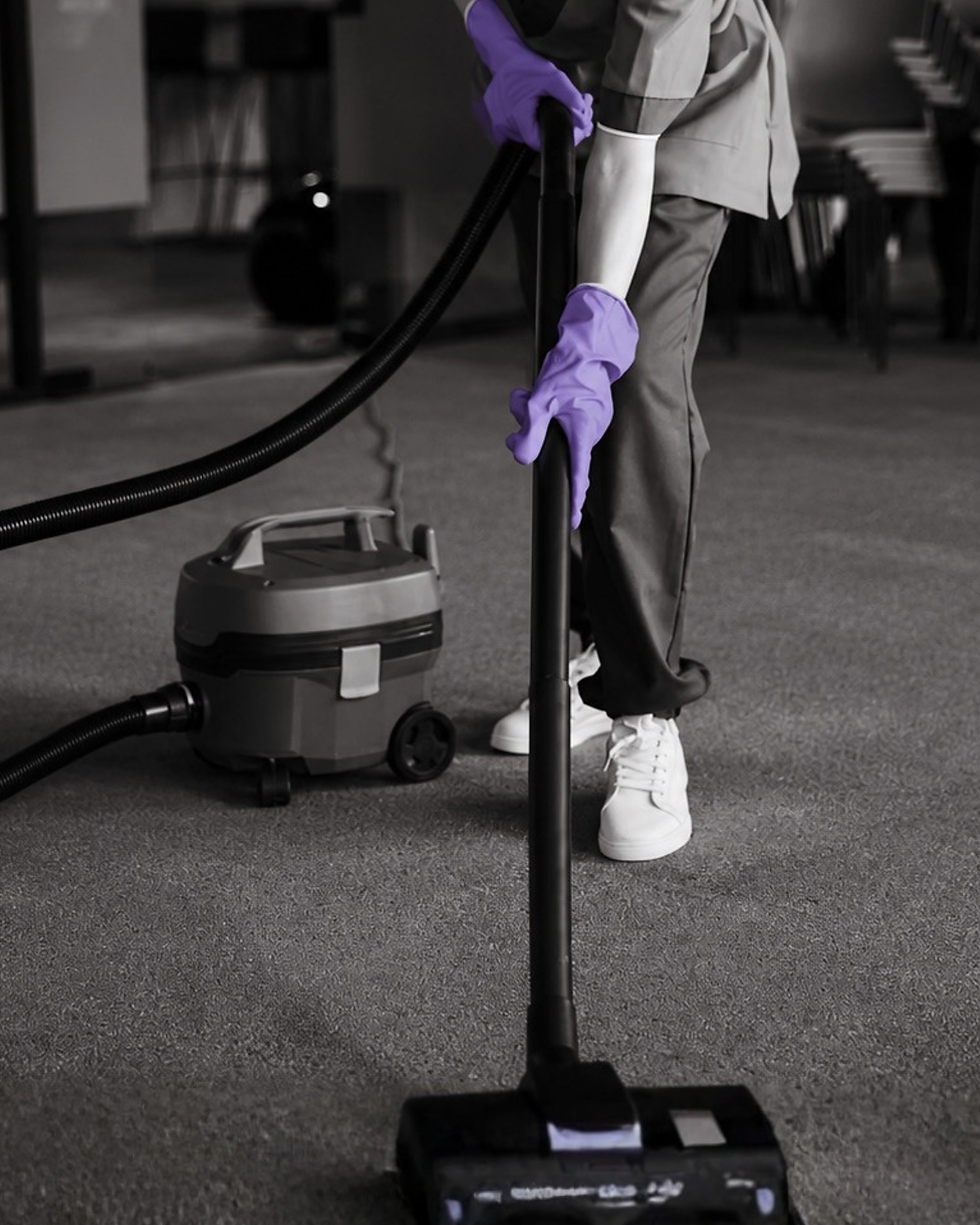
High-footfall flooring carries the visible record of how a space is maintained. Embedded grime in carpet fibres, scuff marks on hard floors, and neglected grout lines communicate to every customer who walks across them, in high-traffic commercial environments, that signal is seen hundreds of times daily.
Air Quality & Odour
Often overlooked entirely, air quality is the most immediately sensory aspect of any commercial space. Stale air, dusty ventilation systems, and poorly maintained extraction units affect how people feel within seconds of entering, often before they have consciously registered anything visual


What poor cleanliness actually costs a business
The financial case for maintaining a clean commercial space is more direct than most businesses realise. It rarely shows up as a cleanliness cost, but it appears clearly in the data.
Customer Churn. 60% of customers say they would leave a brand after just one or two negative experiences. An environment that undermines confidence is a negative experience, even if it's never explicitly named as the reason for leaving.
Revenue Suppression. Research by PwC found customers are willing to pay up to 16% more for a superior experience. A poorly maintained space caps the perceived value of your offering, regardless of its actual quality.
Negative Reviews. In the age of Google and Trustpilot, a client's washroom experience on a Tuesday afternoon can be a public review by Wednesday morning. Online reputation is now inseparable from the in-person experience.
Staff Performance. Employees in clean, well-maintained spaces demonstrate higher morale, greater productivity, and lower absenteeism, all of which directly affect service quality and, by extension, customer experience.
Lost Referrals. Satisfied customers in well-maintained environments are significantly more likely to recommend a business. Referral revenue is quietly suppressed by environments that fail to inspire confidence
"A client who leaves without complaining is not a client who was satisfied. They are a client who decided it wasn't worth the conversation and won't be coming back."
Why consistency is the real differentiator
Here is the insight that separates businesses that genuinely excel on environment from those that merely manage it: consistency matters more than peaks.
A deep clean before a major client visit impresses nobody if the space has been declining for three weeks leading up to it. A spotless Monday morning means nothing if Wednesday afternoon tells a different story. Customer experience is not built in exceptional moments, it is built in the accumulated weight of every ordinary one.
The businesses whose commercial spaces consistently command trust are not the ones that react when things get bad. They are the ones with a maintenance structure that means the standard never gets there. This is the distinction between cleaning and maintaining. Cleaning is reactive. Maintenance is structural. One responds to a problem. The other prevents it from forming.
The DJ Maintenance approach
We work with commercial businesses, offices, property managers, salons, and client-facing operators across the UK to build structured maintenance programmes that protect the standard of their environment; consistently, not occasionally. Every programme is built around the specific demands of your space: your footfall, your client profile, your high-risk areas, and your operational hours. We don't apply a generic contract to a specific building. We design a system that means your space always works in your favour, because for your customers, it always should.

The bottom line is straightforward.
Customer experience is the defining competitive battleground for businesses in 2025 and beyond. 80% of companies now expect it to be their primary differentiator. Billions are being invested in technology, training, and strategy to win on this metric.
And yet one of the most direct, most measurable, and most consistently underinvested contributors to customer experience remains the condition of the physical environment people walk into.
Your customers are forming opinions about your business in seven seconds. Those opinions are shaped; powerfully, silently, and immediately by the cleanliness of your space. They affect trust, value perception, loyalty, spending behaviour, and the likelihood of a referral.
The good news is that this is also one of the most solvable problems in business. It does not require a rebrand, a new product, or a technology investment. It requires a decision to hold your commercial space to the standard your business deserves and a partner committed to delivering it.
That decision is available right now.
Ready to raise the standard?
Your environment is part of your customer experience.
Book a free site assessment. We'll walk your commercial space, identify exactly what's affecting your customer experience, and show you what a properly maintained environment looks like for your business.


Comments